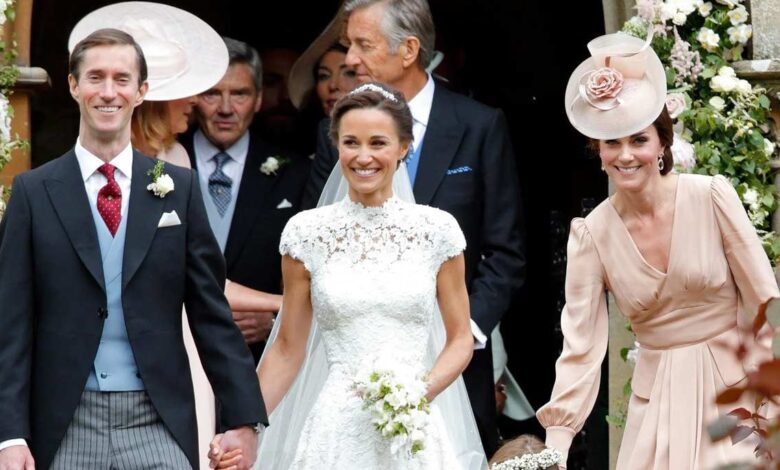
The recent developments involving Pippa Middleton, sister to the Duchess of Cambridge, have garnered significant media attention, particularly surrounding her property dispute in West Berkshire. The inquiry concerning her estate has been temporarily halted, with discussions expected to resume next week. This pause coincides with her ninth wedding anniversary, which she is celebrating privately with her family.
Pippa Middleton’s inquiry pertains to a dispute over a pathway known as Mill Lane, situated within her estate in Kintbury. The controversy has become a focal point as local residents and the estate owners debate the legality of access to this pathway. The issue has led to a broader conversation about privacy rights versus public access rights.
The Middleton family’s move to Barton Court in 2022 marked a significant change, leaving behind their previous residence in Chelsea. The Georgian country mansion provides a luxurious setting but has become the center of this ongoing legal and social debate. The move has undoubtedly added pressure on the dispute, making it more high-profile.
Local residents, supported by The Ramblers’ Association, have petitioned for Mill Lane to be officially recognized as a public right of way. Over 30 people have signed the petition, asserting that the pathway has historically been accessible to the public under previous ownership. This community effort underscores the tension between private property rights and public access.
In response, Pippa and her husband, James Matthews, have argued that the pathway has never been designated as public land. They expressed concerns about privacy and safety, especially considering their children’s safety and the need for a secure environment at their estate. Their stance highlights the importance of protecting private family spaces.
The West Berkshire Council initially ruled in favor of recognising Mill Lane as an official pathway, supporting the residents’ petition. However, this decision faced immediate opposition from Prince William’s in-laws, who challenged the ruling, citing privacy concerns. This has escalated the dispute into a more formal legal challenge.
A hearing was scheduled and began last week to resolve whether Mill Lane should be acknowledged as a public right of way. The proceedings aim to carefully examine historical access and the rights of both the residents and the estate owners. The legal process remains ongoing, as all parties present their arguments.
Currently, the inquiry has been paused until Thursday, 28th May, with proceedings set to continue at Coronation Hall in Kintbury. This temporary hold allows for further evidence to be gathered and for a thorough review of the case. It also provides Pippa a brief respite amid her personal milestone celebrations.
Historically, locals assert that Mill Lane was accessible under previous ownership, suggesting longstanding informal access. However, Pippa and Matthews maintain that the pathway has not been publicly designated, emphasizing their right to privacy. Their concerns reflect a common challenge faced by property owners in rural areas.
The dispute has illustrated broader issues around land rights, heritage, and community access in rural England. As legal proceedings continue, the outcome could have implications for other estates facing similar conflicts. The case emphasizes the ongoing debate between conservation and public right of way.
The upcoming session of the inquiry is expected to bring clarity on whether Mill Lane can be officially opened to walkers or remain a private route. The decision will likely depend on historical evidence and legal interpretations of land rights. Both sides await the verdict that could reshape access policies in the region.
Overall, the Pippa Middleton property dispute remains in the spotlight as legal processes unfold. Her personal milestone coinciding with the pause in proceedings adds a layer of complexity, blending private celebrations with public legal scrutiny. The resolution of this case will be watched keenly by local communities and land rights advocates alike.
This ongoing dispute underscores the delicate balance between respecting individual privacy and safeguarding public access. It exemplifies how personal milestones can sometimes intersect with broader societal debates, highlighting the nuanced nature of land and property rights in rural areas. As the inquiry resumes, all eyes will be on the final judgment, which could influence similar cases in the future.
The case also serves as a reminder of the importance of clear land ownership records and the need for transparent legal processes in resolving such conflicts. The outcome will set a precedent and possibly lead to changes in how pathways are designated and managed across rural estates. The resolution may determine the future landscape of land rights in West Berkshire and beyond.
In conclusion, Pippa Middleton’s property matter is more than a local dispute; it is a reflection of ongoing societal tensions about private versus public rights. The pause in proceedings during her celebration period underscores the personal aspect amidst a broader legal battle. The upcoming decisions will not only affect her estate but could also influence land access policies for many other rural communities.