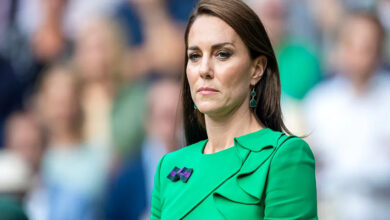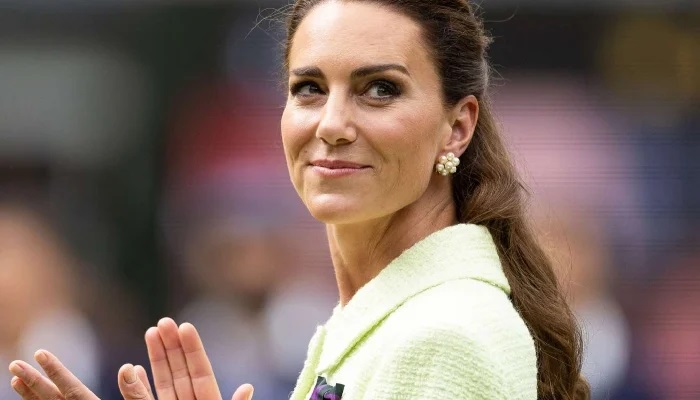
As the prestigious Wimbledon tournament unfolds, preparations are underway for the possibility that Princess Kate, the Princess of Wales and patron of the All England Club since 2016, may not attend due to ongoing cancer treatment.
Kate’s public appearances have been limited since her disclosure of undergoing cancer treatment earlier this year.
Her most recent sighting was at the ‘Trooping the Colour’ ceremony on June 15, where she appeared on the Buckingham Palace balcony, smiling and waving. However, uncertainty looms over her attendance at Wimbledon this year.
During the first week of Wimbledon, Kate’s parents, Carole and Michael Middleton, were present, underscoring the family’s longstanding relationship with the All England Club dating back to 1907.
Kate herself has maintained a tradition of attending trophy ceremonies at Wimbledon, with the exception of 2013 when she was pregnant with Prince George.
According to reports from the Telegraph, preparations are being made for the Duchess of Gloucester to step in and present this year’s trophies should Kate be unable to attend.
The Duchess of Gloucester, known for her passion for tennis and her role as Honorary President of the Lawn Tennis Association for over two decades, is reportedly ready to fulfill this role if necessary.
Debbie Jevans, chair of the All England Club, emphasized that while they hope Kate will be able to present the trophies as the Club’s patron, her health and recovery remain the priority.
“We’re hopeful that the Princess of Wales will be able to present the trophies as the Club’s patron, but her health and recovery is the priority,” Jevans affirmed.
Read More: Queen Camilla’s Alleged Plans Amidst Tensions with Kate Middleton
Acknowledging the uncertainty surrounding Kate’s attendance, Jevans emphasized the Club’s flexibility in decision-making, stating, “We don’t know what we don’t know.
All we’ve said is that we’ll work with her and give her as much flexibility as possible.”
The Duchess of Gloucester, married to Queen Elizabeth’s first cousin, Prince Richard, has already attended Wimbledon twice this year, demonstrating her ongoing involvement and commitment to the sport.
Her potential role in presenting trophies reflects the Club’s preparedness and respect for protocol amidst Kate’s health considerations.
As Wimbledon progresses, the focus remains on Kate Middleton’s health and the supportive measures in place from the All England Club, ensuring that traditions are upheld with sensitivity to her circumstances.